Choose a year. Find a story. Stay as long as you like.
A smaller doorway. The whole story inside.
A few chapters from
2014
5 stories
1970
One activist, many chapters
Cat dates her first protest to the first Earth Day in 1970, when she was a high-school sophomore.
Before Deep Green
Environmental issues, women’s rights and LGBTQ rights were among the causes she later supported. Occupy and cannabis advocacy came in later decades.
In the mid-1970s she was an activist in uniform. In the 1980s and 1990s she was a woman in business. Along the way, she worked as a grower, extractor, business consultant, accountant and community organizer.
Cat worked as a journalist in Germany after an assignment to a combat unit on July 1, 1977.
She remembered the energy of that time, the difficulty of being a woman in a combat unit and the feeling that all eyes were on her. It was one of her early experiences with activism.
Cat recalled being one of the first women assigned to a combat unit.
Cat moved from Missouri to Seattle in November 1993.
Microsoft was growing and the internet was taking shape. Cat remembered Seattle as a city full of possibility, a place that suited her outlook and felt ready for whatever she wanted to try.
Marriage rights brought Cat to the Speakers Bureau of the Legal Marriage Alliance of Washington in 1996.
She spoke about looking beyond her own life and finding ways to help make change. Years before her cannabis advocacy, she was already lending her voice to a cause.
Cat spent these years experimenting with cannabis-infused oils, butters and growing.
Around 2010, she made her first batch of full-extract cannabis oil. The work grew out of several years of learning and experimentation, leading into the Deep Green chapter.
Cat founded Deep Green Extracts in 2010, making tested, full-plant cannabis extracts for the medical cannabis community.
Making the product
Testing and outreach were part of the business from the beginning. In Tacoma, Cat worked as both producer and accountant. Business consulting and community organizing sat alongside the practical work of making extracts.
Sharing her experience
By September 2021, her PodConx profile described her continuing to share what she knew. Producing extracts and helping people understand them remained closely connected parts of her work.
Deep Green in print
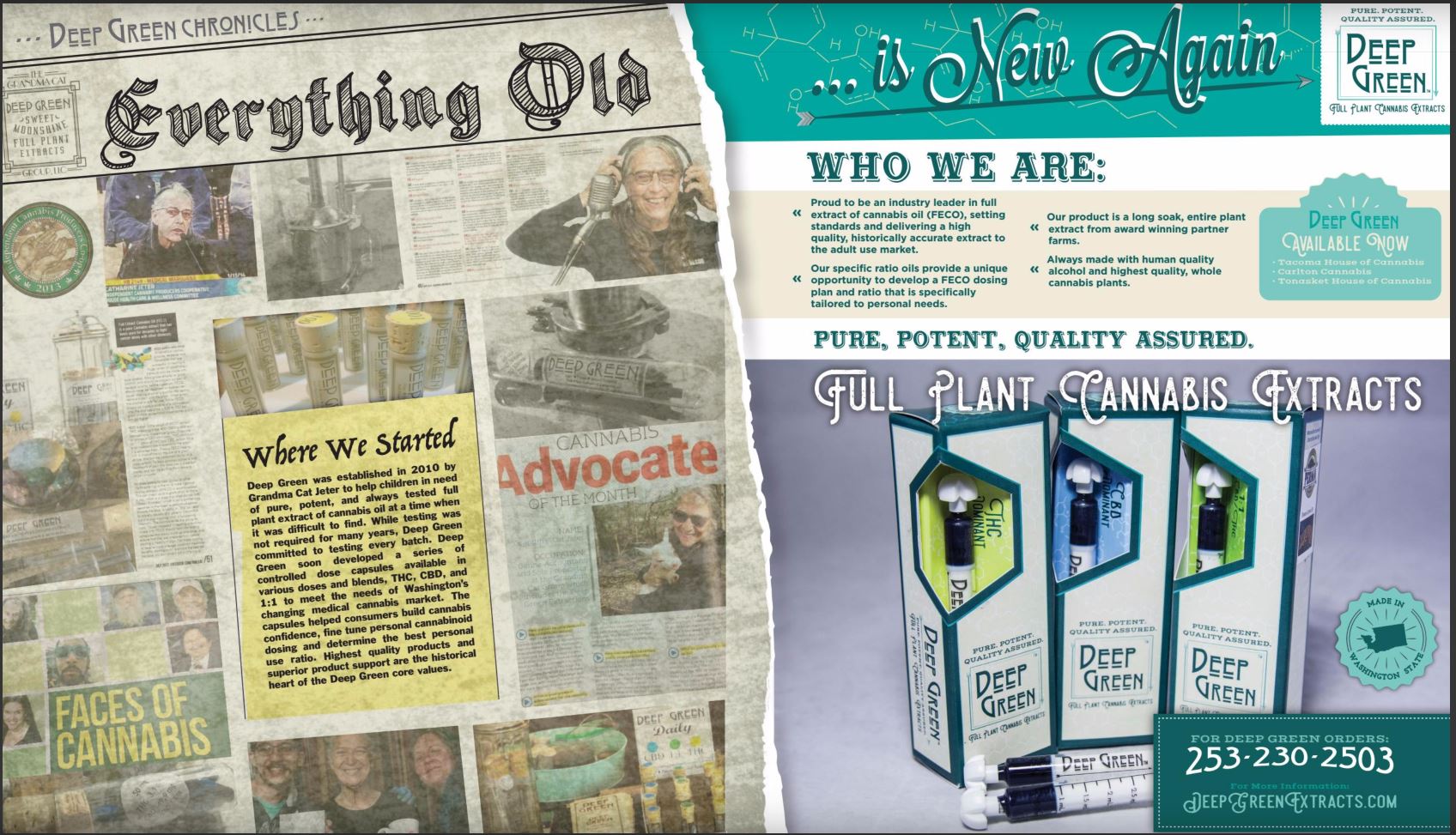
An October 2017 advertisement shows Deep Green’s adult-use packaging and looks back to the company’s beginnings in 2010.
Cat and Kevin Heiderich helped form a Tacoma Hempfest board in 2011, following the city's first event the year before.
Tacoma Weekly looked back on that beginning in its November 2022 profile. The story places Cat's community organizing alongside her work building Deep Green, with both taking shape in Tacoma.
On1 called Cat on November 6, 2012. A month later, she was on the air with Green Stream, alongside On1 and Timmy.
The first show
The proposed agenda for December 6 introduced Green Stream as an open forum and information clearinghouse. Host introductions, Washington’s I-502 and Colorado’s Amendment 64 were on the plan, along with what the changes could mean for individuals, businesses and medical cannabis consumers.
Room for a conversation
Cat described a weekly show that could move between science, legal questions, activism and growing. She liked having a microphone and room to air an opinion.
Episode 56, a later conversation about Lobby Day and medical access, is available in the listening archive.
Cat brought her opposition to two cannabis proposals before Washington's Senate Health Care Committee.
The committee's records name Catharine Jeter in the testimony lists for SB 5528, concerning medical cannabis, and SJM 8000, a memorial concerning federal rescheduling. Both records place the public hearing on February 4, 2013.
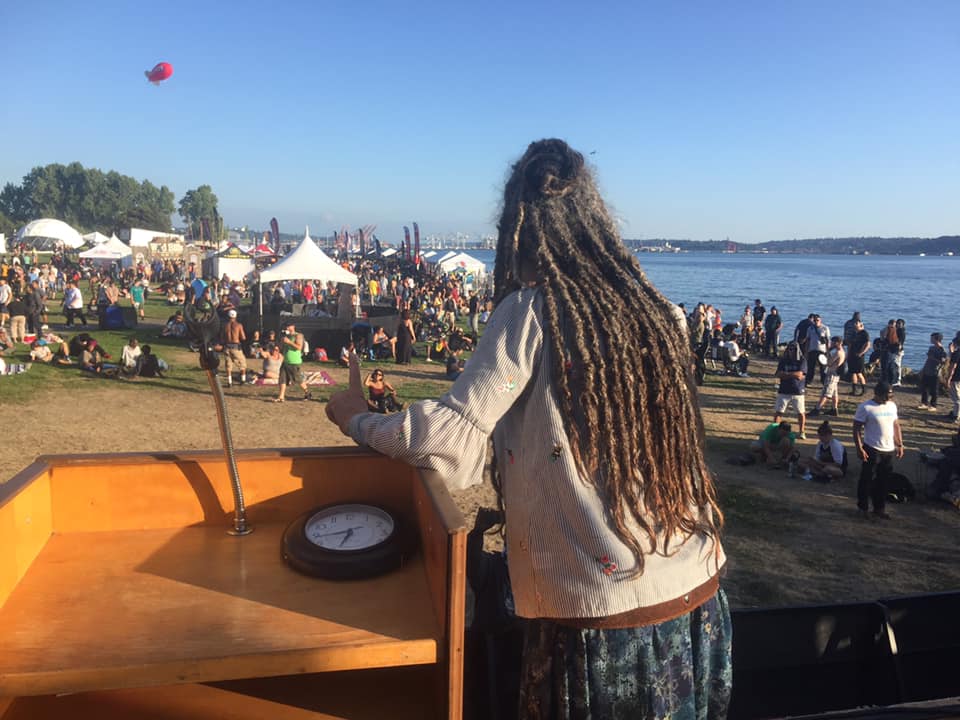
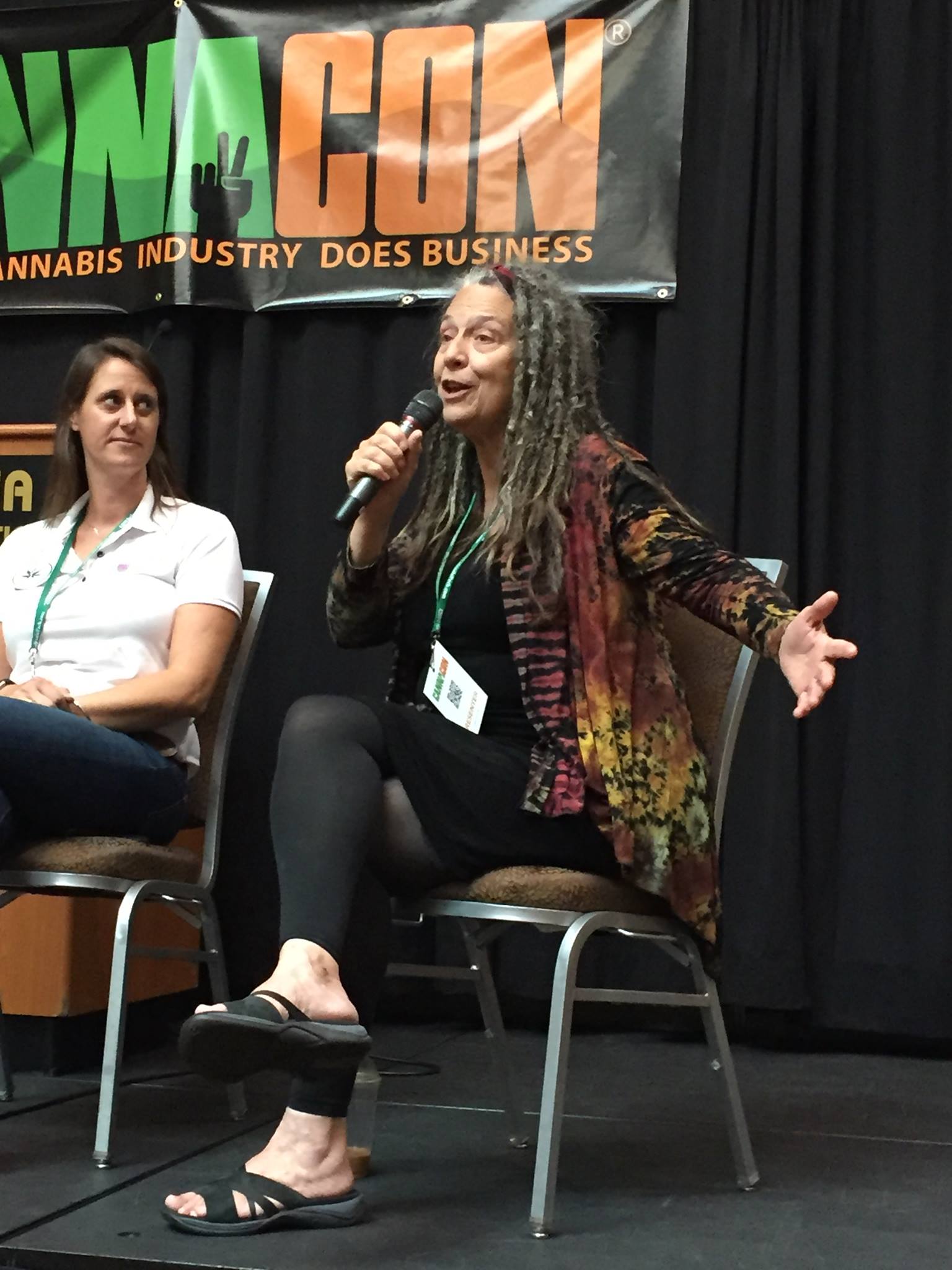
Cat took the microphone at Canna We Talk, standing beside a Town Hall podium and a banner calling for safe, affordable medical cannabis access.
The photograph in her collection carries an Alex Garland Photography credit. It catches another part of the public conversation unfolding around Washington’s changing cannabis laws.
Fresh from an organizing meeting in Federal Way, Grandma Cat joins the Green Stream hosts to talk about Washington’s medical cannabis community and House Bill 2149.
Getting people to Olympia
The group previews lobby days and urges listeners to contact legislators in their own words. For people who cannot attend, they discuss calls, letters, postcards and email. The Faces of Medical Marijuana project offers another way to take part: a video, photograph or short written account.
What the changes could mean
The conversation turns to patient registries, growing limits, collective gardens and growers’ excess production. Cat and the hosts discuss alternatives to an all-or-nothing choice, and the different needs of medical providers and recreational retailers.
Back to the community
Between music breaks and studio banter, the hosts discuss Florida, New York and Colorado, and cannabis satire mistaken for news. They close with a Cannabis Action Coalition survey about the effects of proposed changes on patients and small businesses, followed by another call to make their voices heard in Olympia.
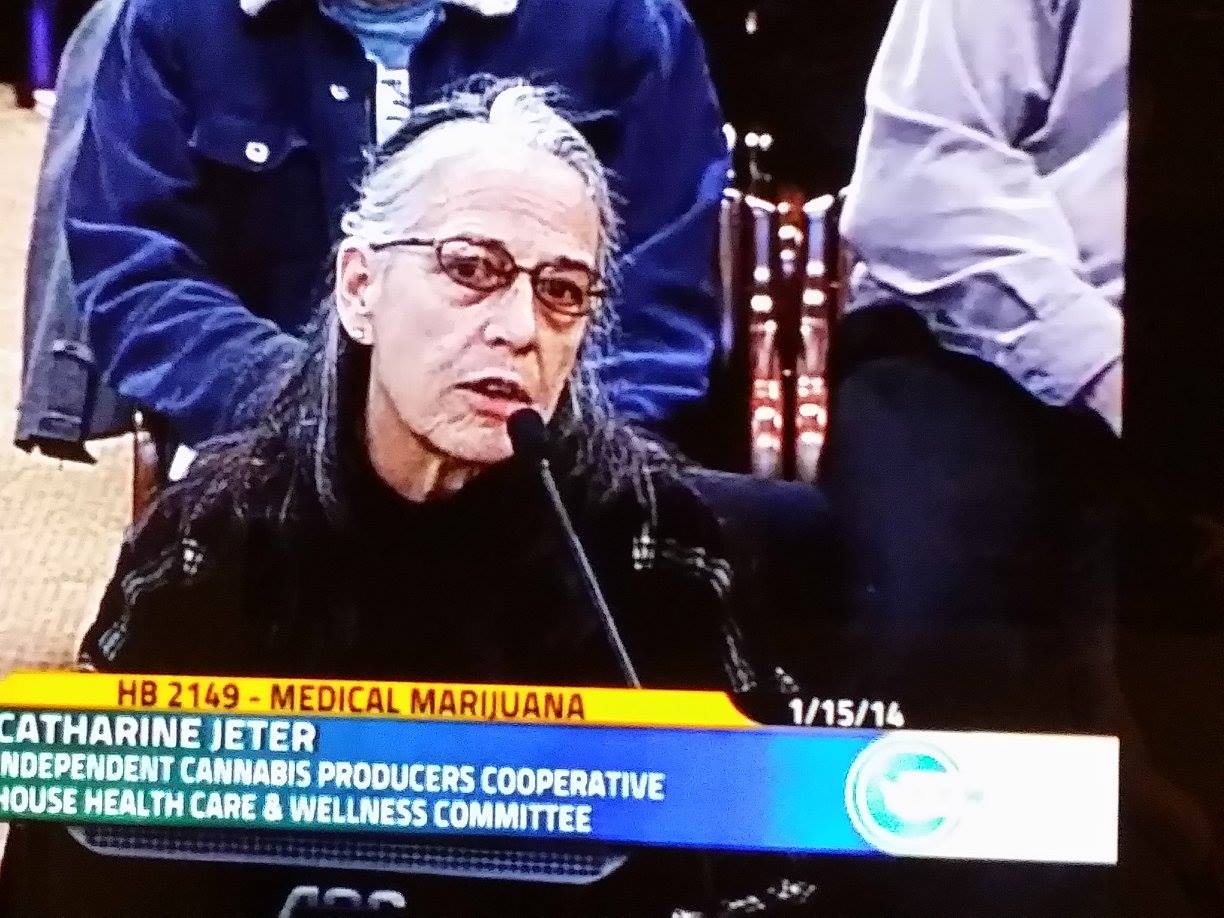
Cat appeared before the House Health Care & Wellness Committee during its hearing on HB 2149, concerning medical marijuana.
Speaking up for access
Washington was deciding how medical cannabis would fit alongside its developing recreational system. The bill proposed smaller possession limits, an end to collective gardens and a recognition-card system.
Cat was listed among those testifying in opposition, representing the Independent Cannabis Producers Cooperative. Home growing, privacy, patient needs and the future of small providers were at the center of the debate.
House Health Care & Wellness Committee, January 15, 2014. Catharine Jeter, Independent Cannabis Producers Cooperative.
As HB 2198 moved between House committees, Cat spoke against the proposal in both Finance and Appropriations.
The Finance hearing took place on January 15. The Appropriations hearing followed on February 7. The Finance report names her with the cannabis producers cooperative, preserving another part of her work in Olympia that winter.
Green Stream's Episode 69 listing brings Grandma Cat into the conversation by phone from the Big Industry Show.
The episode was published amid a run of weekly conversations about cannabis news, community events and the people behind them. This time, the call brought a host's view from outside the studio.
Green Stream’s Episode 71 notes name Cat among the people in the studio.
The listing returns the archive to a studio conversation, following the earlier call-in from the Big Industry Show. Both episodes are now part of the listening collection.
Cat appeared before the Senate Ways and Means Committee as lawmakers considered SB 5052, the Cannabis Patient Protection Act.
The committee's testimony list names Catharine Jeter with the Independent Cannabis Producers Cooperative. It was another hearing in the debate over how Washington's medical cannabis system would change.
Cat spoke in support of SB 5379, a proposal concerning post-traumatic stress disorder and Washington's medical cannabis program.
The Senate Health Care Committee's analysis lists Catharine Jeter as a veteran and with the Independent Cannabis Producers Cooperative. The hearing connects two threads that recur in her public work: veterans and medical access.
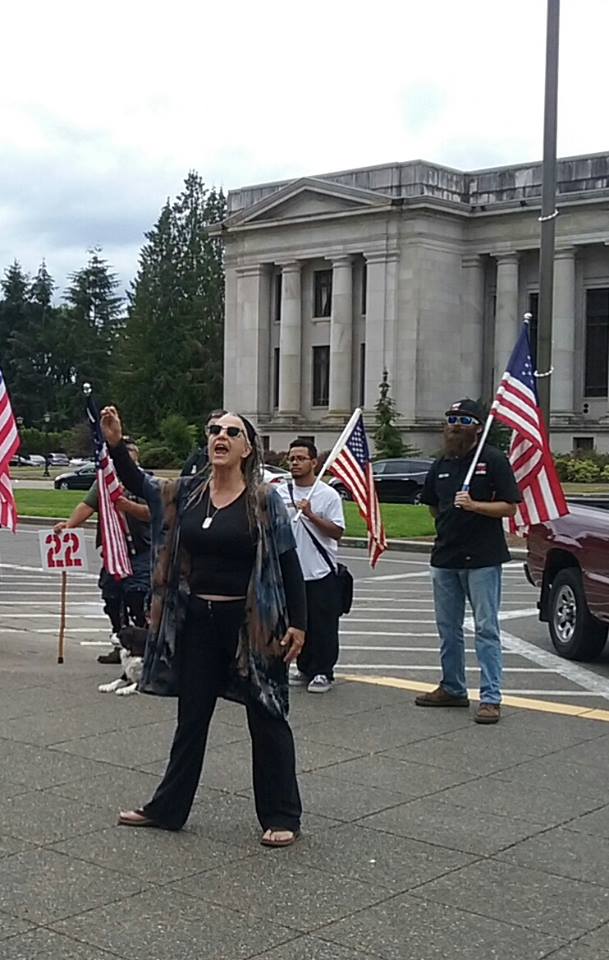
Cat spoke outside the Legislative Building in Olympia at a rally drawing attention to veteran suicide and advocating medical cannabis access.
A photograph by Steve Bloom of The Olympian identifies her at the July gathering. American Homefront later published the image with its reporting on veteran-suicide statistics.
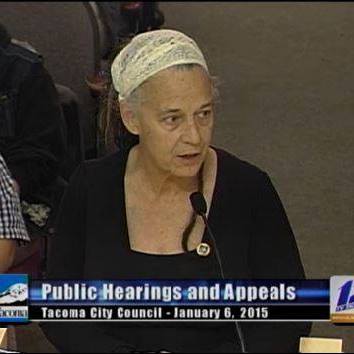
Cat ran for Pierce County's Charter Review Commission, District 4, Position 1, in the 2015 primary.
Her candidate statement brought together her accounting background and community work. The final results record 1,554 votes, or 12.71 percent, placing her third among the four named candidates.
In a conversation with Shango Los, Cat looked back at Washington’s medical cannabis community and the choices facing it.
Before an industry
Cat described an early community built on personal relationships. Access often depended on knowing someone, and helping another person could carry real risk. Compassion came before a dependable commercial system.
A difficult transition
As Washington moved toward a larger adult-use market, Cat worried that patients and small producers could be pushed aside. The people who had built the medical community needed a place in what came next.
Keep moving together
Her advice was practical: stay calm, give people time to learn and recognize a partial victory. Disagreement did not need to become personal warfare among people with much of the same purpose. Keep caring for the community and keep moving forward.
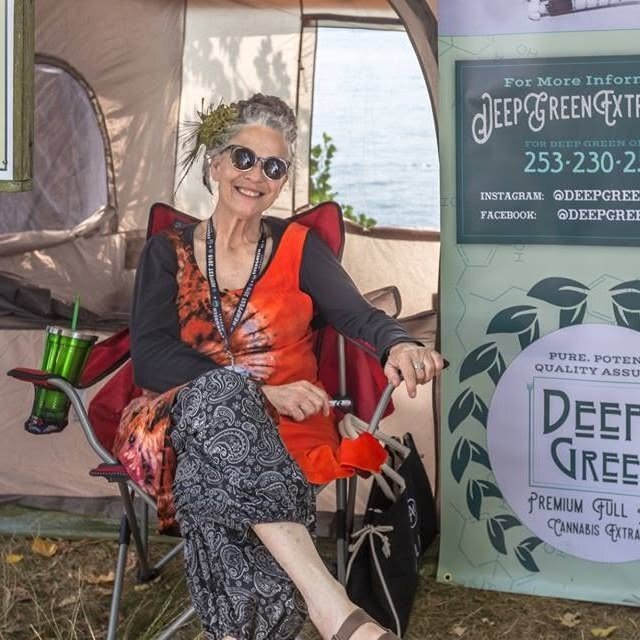
Cat at a Deep Green booth. From her public Facebook collection.
Cat and the Deep Green team gathered to celebrate a partnership with Emerald City Gardens.
The photograph in her collection shows papers on the table and a message celebrating a bright future together for the two businesses. It preserves a moment of optimism in Deep Green’s history.
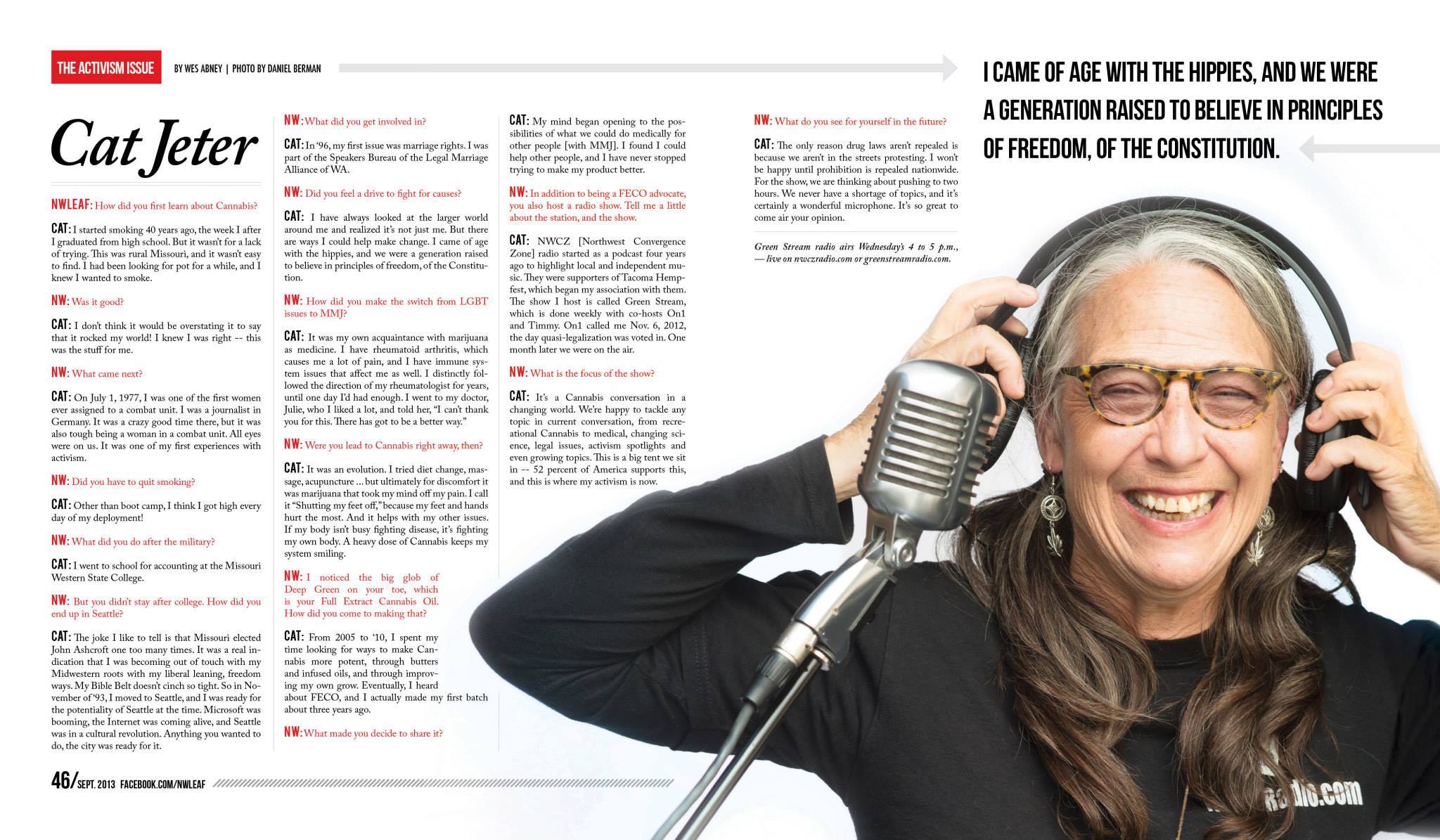
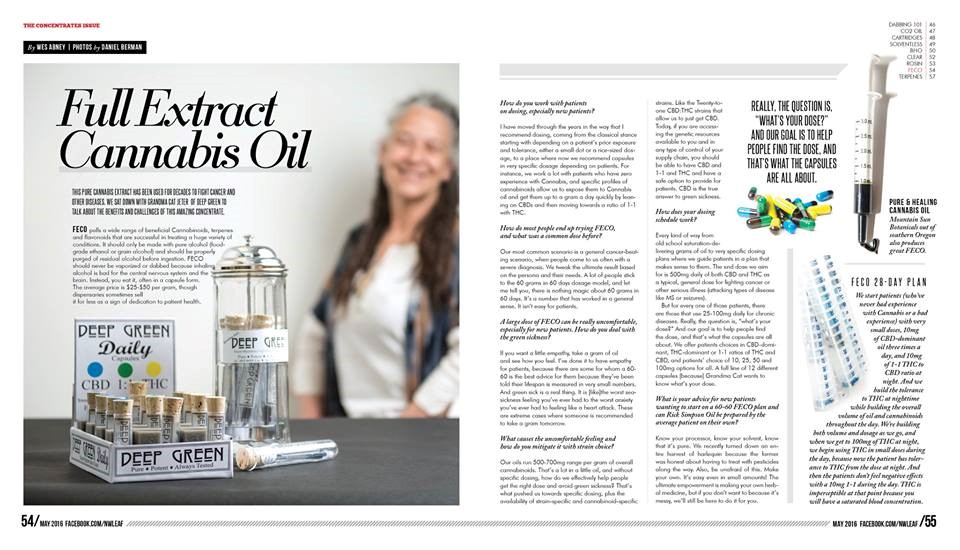
Northwest Leaf's Kush Creams Expanding feature describes a partnership with Deep Green and Perma Cannabis as Kush Creams entered Washington's recreational market.
The article includes Cat's perspective and describes her role helping connect the companies. Wes Abney wrote the feature, with a product photograph by Daniel Berman and a portrait by Kristen Angelo.
In her Northwest Leaf essay, Cat argued that good intentions needed clear language, safer practices and dependable standards behind them.
What’s in a name?
Cat questioned naming cannabis extracts after one well-known person. The same name could describe products made in different ways, leaving people without a clear explanation of what they were getting.
She wanted producers to explain what a product was and how it was made, rather than relying on the reputation attached to a name.
Four questions
Sanity, solvent, safety and surety were her four concerns. She challenged unsafe preparation practices, misleading terminology and promises that one approach would work for everyone.
Testing and quality assurance mattered, but so did the work around them. Experienced producers had a responsibility to set high standards and explain them clearly.
A report from Weedstock in Whitman County finds Cat among the people talking about cannabis and its place in the community.
HeraldNet's April 22 story quotes her and introduces her as an extraction specialist and advocate from Tacoma. It adds a written record of an earlier Weedstock appearance alongside the later stage photograph in her collection.
Grandma Cat introduces herself from Washington State, with roughly a decade of work making full-plant cannabis extracts behind her.
Still here
Making history is hard, she tells her audience. But she is still here, still working and still explaining.
More to talk about
Culture, medicine, legalization and politics are all up for conversation. Her welcome leaves room for practical questions and the wider world around them.
From the original video
June 2019 · 0:11 · English captions
Read the excerpt transcript
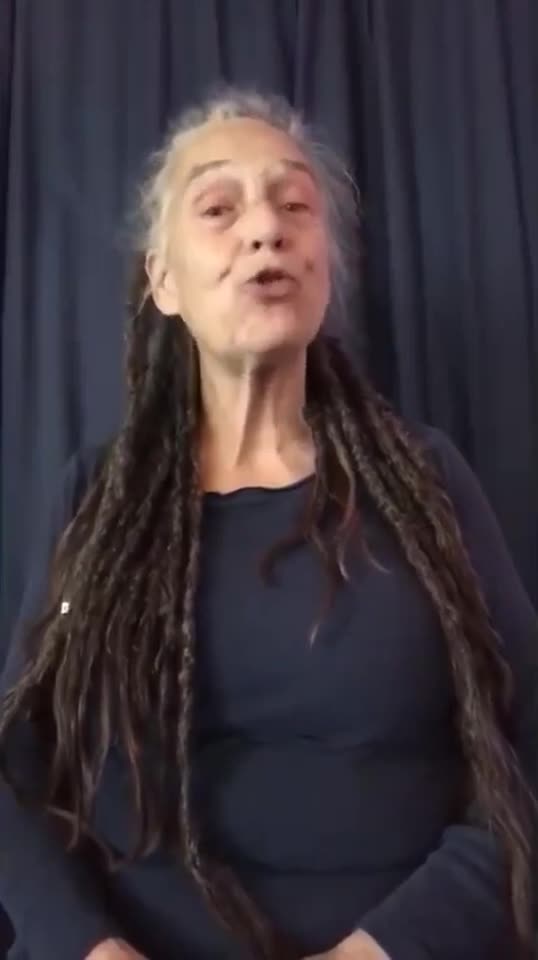
I'll put up another short video. We'll talk about culture, we'll talk about medicine, we'll talk about legalization. Who knows? Maybe we'll talk a little politics along the way.
Cat Jeter · Grandma Cat’s public YouTube archive · 1:25.35–1:36.15 of the original · Watch the original video
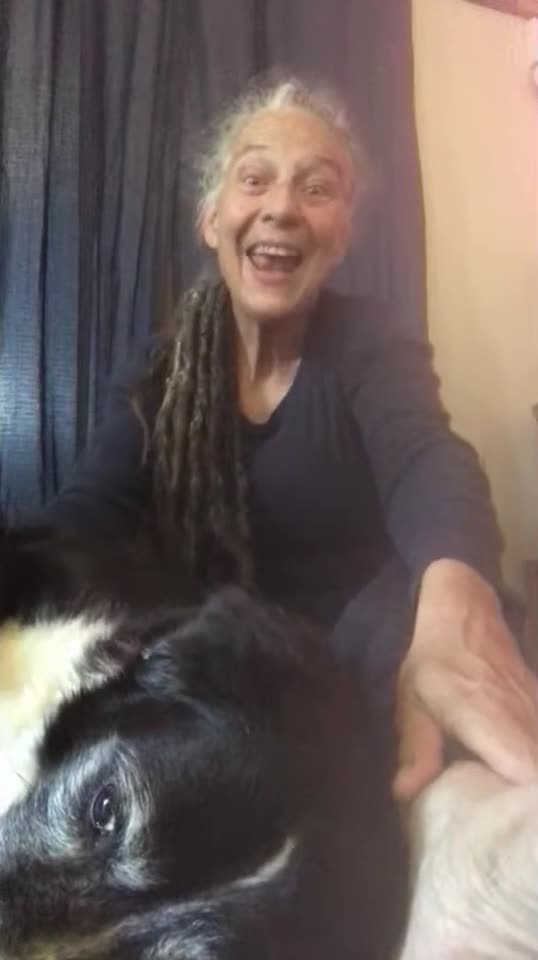
Lucy the Cannadawg joins Cat for a casual video. Many viewers already know her from Hempfest and other activities.
Good company
On the way to filming, Cat remembers Lucy prancing like a pup. Every day with Lucy is a good day, she says.
Lucy is both a familiar face in the community and the companion right there beside her.
From the original video
July 2019 · 0:16 · English captions
Read the excerpt transcript
Hey everybody, it's Grandma Cat and I've got Lucy the Cannadawg with me today too. We're gonna have a little casual video today. Many of you are familiar with Lucy, either having seen her at Hempfest or with some of our various activities.
Cat Jeter · Grandma Cat’s public YouTube archive · 0:00.20–0:16.50 of the original · Watch the original video
Cat joined a testimony panel when the House Commerce and Gaming Committee heard HB 2546, a proposal concerning cannabis concentrate potency.
Cannabis Observer's account preserves a named audio segment and a link into the hearing recording. The appearance carries her public advocacy into the next decade.
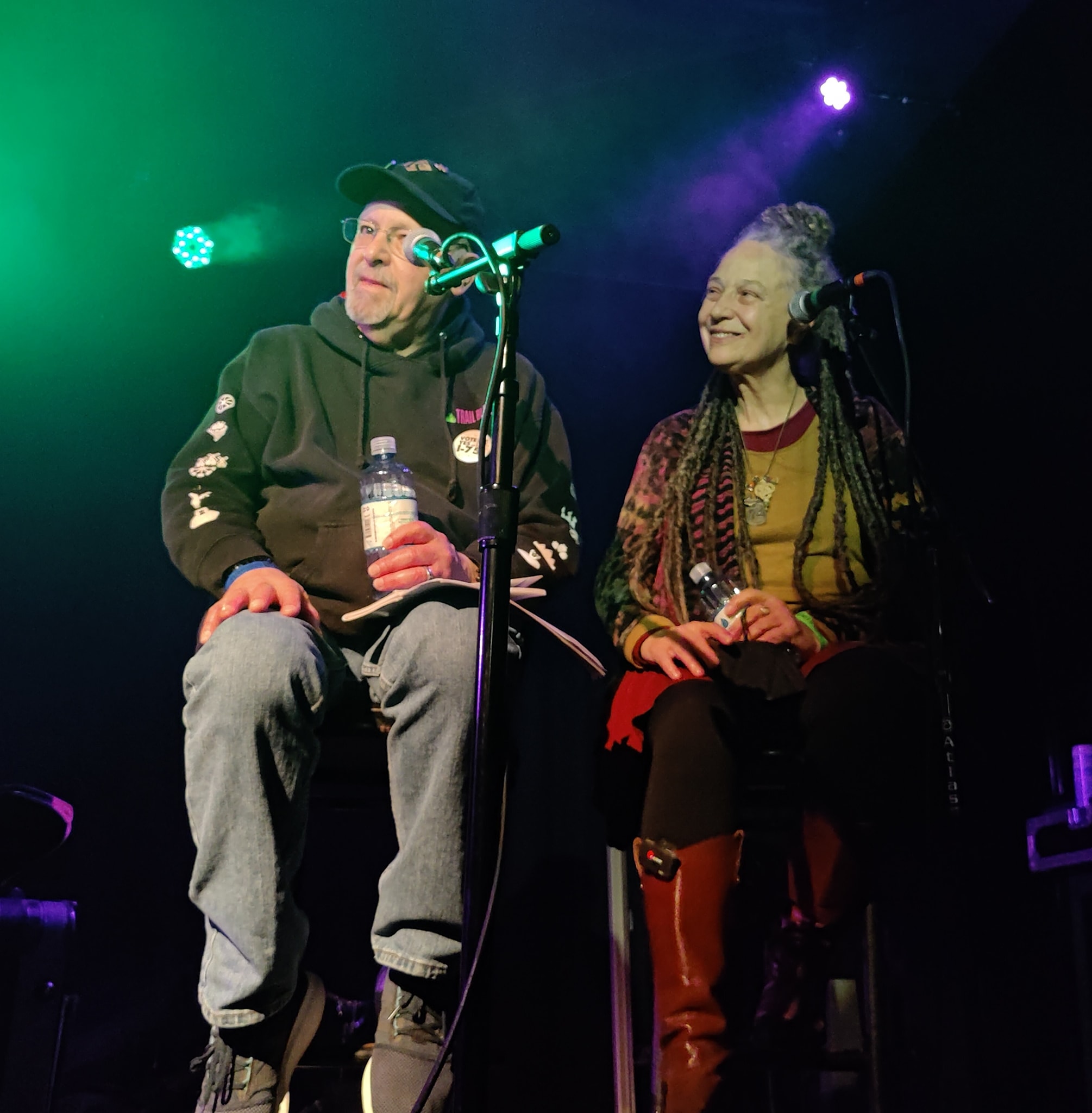
Cat joined Joy Beckerman for Hemp Barons episode 132, titled Cat Jeter | Grandma Cat.
The publisher introduces the episode as a conversation about Cat's career. The full episode is listed at just under 46 minutes, giving listeners another way into her story.
Back in western Washington, Cat returns to her audience after a couple of unsettling years. It is time to get back to work.
A name you can read
Viewers had told Cat that it was hard to tell their FECO Drops formulas apart, especially when they kept several on hand. She responded by making the formula names much larger.
In her Post Pandemic Update, she thanks people for their suggestions and shows them what changed.
Spring ahead
Cat closes with good wishes for her viewers after everything they have persevered through. She looks forward to better times with spring ahead, and leaves them with a simple wish: be well.
From the original video
March 17, 2022 · premiere · 0:15 · English captions
Read the excerpt transcript
Hey everybody, it's Grandma Cat from beautiful western Washington getting back with you with some videos. It's been a couple of years and unsettling as they have been, it's time for me to get back to work.
Cat Jeter · Grandma Cat’s public YouTube archive · 0:01.00–0:15.60 of the original · Watch the original video
Cat raised patient-access concerns at a Department of Health medical cannabis town hall hosted by the Cannabis Alliance.
Cannabis Observer's report follows her remarks and links to a recorded segment. Access remained a subject she brought into public discussion, a decade after the early Olympia hearings.
A November 2024 Northwest Leaf profile looks back on Cat's earlier work at the House of Cannabis Whidbey location; it does not date that work.
Written by Mike Ricker, the story connects that earlier chapter with Kevin Heiderich's later business. It is another place where the history of Deep Green surfaces in the community around it.
Cat returned to Leaf Life for episode 300, 6 Years in the Making.
The publisher names her in the milestone episode, following the documented 200th-episode appearance. Her conversations with the show continued as its own archive grew.
The Mycology Spirit Festival programme in Olympia listed Grandma Cat Jeter for a session titled Freedom is a moving Target.
The advertised session placed her among the festival's educational speakers, carrying a familiar theme from her public life into another community gathering.
Tacoma Weekly returned to Cat for comments on federal cannabis policy, local access and plant freedom in its year-end issue.
The staff report quotes her in the issue spanning December 31 through January 6, 2026. The conversation brings the archive into another year of her public advocacy.